
 How Pegasus-Style Spyware Really Infects Phones">
How Pegasus-Style Spyware Really Infects Phones
How Pegasus-class spyware differs from commodity malware
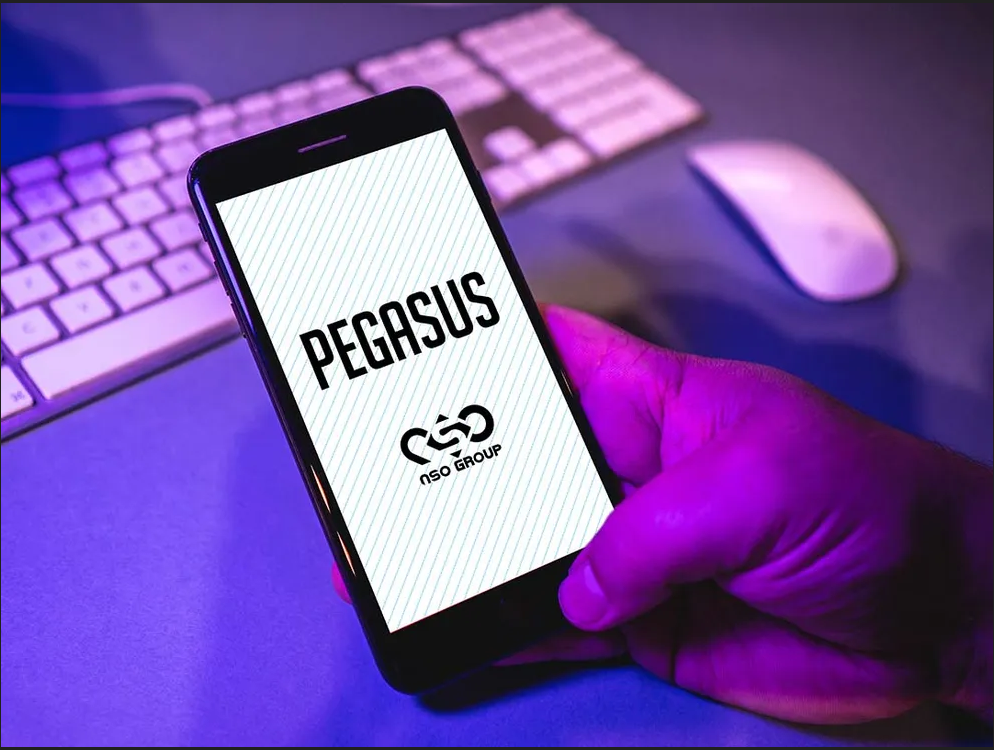
The first step in defending against Pegasus-style spyware is to understand what it is—and what it is not. Pegasus, developed by NSO Group, is a class of mobile spyware designed to compromise modern smartphones without tipping off the user. Unlike commodity "stalkerware" or low-end spyware that relies on tricking people into installing malicious apps, Pegasus typically exploits previously unknown vulnerabilities (zero-days) in messaging apps, image libraries, or baseband components. Once installed, it can quietly access messages, microphone, camera, location, and encryption keys, often with the same privileges as the device’s operating system.
A defining feature of Pegasus-class tooling is the shift toward zero-click exploitation. Instead of needing a victim to tap on a suspicious link, attackers weaponize inputs that devices process automatically: push notifications, iMessage payloads, or specially crafted media files. Research labs have documented exploits where simply receiving an image over a chat app was enough to compromise a device. Apple’s iMessage BlastDoor sandbox and Lockdown Mode were introduced in part to blunt these techniques, but offensive teams continuously search for new paths around such defenses.
The infection chain usually unfolds in stages. First, the attacker identifies a viable remote entry point—often a widely deployed consumer app or protocol. Next, they chain multiple vulnerabilities: one to achieve initial code execution in a constrained process, another to escape sandboxes, and a third to gain kernel-level control. These exploits must work reliably across specific OS versions and hardware profiles, which is why high-end mobile spyware campaigns tend to focus on well-defined target sets (for example, particular iPhone or Android models used by a country’s political leadership). Once control is established, the implant is deployed. From that point forward, the compromised phone becomes a sensor platform for the operator.
Pegasus-style implants can capture plaintext content even from end-to-end encrypted apps because they hook into the device before encryption or after decryption. They can silently record calls, activate the microphone for ambient room audio, exfiltrate documents and photos, and track movement in real time. Sophisticated variants use modular architectures: the implant loads specific capabilities—such as screen capture or keylogging—on demand to minimize its footprint and reduce the chance of detection.
Another hallmark of Pegasus-class spyware is aggressive anti-forensics. Modern implants are built to erase logs, randomize artifacts, and disguise their network traffic as innocuous app activity. Many will self-destruct if they detect unusual debugging tools, OS integrity checks, or configuration anomalies. Some campaigns use short-lived infrastructure and constantly shifting domains to make retrospective investigation difficult. These techniques don’t make detection impossible, but they do mean that only a handful of labs worldwide have demonstrated the capability to attribute infections with high confidence.
For security decision-makers in government and enterprise, the implication is clear: Pegasus-style spyware is not a theoretical risk or a niche concern for journalists alone. It represents a mature, well-funded capability that has repeatedly been deployed against officials, diplomats, opposition figures, and corporate leaders whose communications shape policy and markets. Understanding how these tools work—and where consumer smartphone defenses can fail—is a prerequisite for designing realistic protection strategies for your own high-risk users.
Real-world Pegasus campaigns against journalists, activists, and officials
Citizen Lab’s forensic work offers one of the clearest windows into how Pegasus-class spyware is actually used in the wild. In its detailed reports on zero-click exploit chains such as FORCEDENTRY and PWNYOURHOME, researchers document how a single malicious image or invisible iMessage can trigger a cascade of vulnerabilities and ultimately give an operator near-total control of an iPhone.
For example, in FORCEDENTRY, a specially crafted file masquerading as a GIF abused Apple’s image rendering library to achieve arbitrary code execution, after which Pegasus was quietly installed. You can explore that research in depth here: Citizen Lab FORCEDENTRY report.
These technical exploit chains matter for executives and government officials because they shift the threat model. Traditional advice—"don’t click suspicious links"—simply doesn’t cover zero-click attacks. In multiple campaigns, including those documented against journalists at Al Jazeera and civil-society organizations in Mexico and Catalonia, victims were compromised without ever tapping a link. Devices were exploited while running fully patched operating systems at the time. The lesson is uncomfortable: at the nation-state level, even best-practice patching and hygiene are necessary but not sufficient.
It’s also important to understand who gets targeted. Pegasus and similar tools are expensive and are sold—at least nominally—only to governments. That means they are reserved for people whose communications are strategically valuable: cabinet-level officials, diplomats, defense and intelligence personnel, CEOs in sensitive industries, counsel on high-stakes litigation, and sometimes their families and close associates. Investigations like "The Great iPwn" detail how journalists’ phones were compromised as part of broader geopolitical struggles, and how relatives and aides were targeted to get to a primary figure.
Another trend is the move toward cross-platform spyware ecosystems. While Pegasus is best known for iOS operations, commercial- and state-grade spyware now regularly targets Android as well. Threat research from companies such as Palo Alto Networks and Lookout has described Android surveillanceware families that use similar tactics: exploiting zero-days in image libraries, abusing accessibility services, and installing modular implants to record audio, harvest messages, and track location over the long term.
A recent analysis of the LANDFALL spyware, for instance, showed how malformed image files sent over WhatsApp could compromise Samsung devices and deploy a sophisticated surveillance framework. From an operational perspective, these cases show that high-end mobile spyware is rarely about one-off access. Operators often maintain persistent access, use multiple exploit chains over time, and pivot from one compromised device to others in a target’s circle. They may use initial infections to map social graphs, understand travel patterns, or identify which conversations merit more intrusive collection (such as live microphone capture during calls). Once embedded, implants can be extremely stealthy, leaving minimal forensic traces and blending their network traffic with legitimate app activity.
For organizations that rely heavily on consumer smartphones for sensitive work, this body of evidence should trigger a re-evaluation of assumptions. BYOD-heavy environments, where personal iPhones and Androids double as executive communication hubs, are particularly exposed. So are teams that operate in or communicate with high-risk jurisdictions where commercial spyware has been repeatedly documented. Even without naming specific vendors, security leaders should recognize that Pegasus-style capabilities are no longer exotic; they’re part of a broader commercial ecosystem that continues to innovate around OS hardening and mitigations.
Defensive strategies for executives, officials, and enterprises
Given this landscape, what can leaders actually do to reduce their exposure to Pegasus-style threats without grinding operations to a halt? The first step is separating mobile risk into tiers. Not every employee faces the same level of targeting. Boards, C-suite executives, national security decision-makers, key deal teams, and certain legal and communications roles merit a much higher level of protection than the general workforce. Start by inventorying who handles especially sensitive conversations over mobile—strategic M&A, geopolitically sensitive negotiations, sanctions exposure, classified or export-controlled material, or communications that could move markets or destabilize a situation if exposed.
For this highest-risk cohort, organizations increasingly adopt a dual-device model. One device—often a standard consumer smartphone—remains for everyday apps, personal messaging, and regular travel. A second device is reserved for sensitive voice and messaging only. On that device, app installs are tightly controlled, configuration is locked down, and mobile OS and baseband updates are treated as operational events rather than casual background processes. In some environments, it is never associated with personal Apple IDs or Google accounts, and it may only connect to vetted networks or a specific secure mobile service.
Policy and training matter as much as technology. Executives and officials should have clear guidance on where it is acceptable to discuss what. That can include explicit prohibitions on using mainstream apps for discussions at certain classification or sensitivity levels, restrictions on carrying primary devices into particular countries or facilities, and instructions on using secure alternatives when traveling. CISA and partner agencies have published evolving mobile security and spyware guidance that can be used as a baseline for internal standards—for example, their advisories on commercial spyware targeting messaging apps and high-risk users: CISA advisories index.
Detection and response strategies must also adapt. Because zero-click exploits aim to leave little visible trace, defenders can’t rely on obvious indicators such as strange SMS links. Instead, they need a combination of mobile threat defense tooling, network telemetry, and disciplined incident response procedures for suspected mobile compromise.
For extremely high-risk roles, some organizations arrange periodic forensic reviews of mobile devices through trusted labs, particularly after travel to regions where Pegasus-class spyware has been heavily deployed. When indicators do surface—such as unexpected OS crashes, unexplained account alerts, or security notifications from vendors—there needs to be a rehearsed playbook for containment, replacement, and communications.
Finally, leaders should view Pegasus-style threats as a strategic driver for architecture change, not just as a reason to bolt on another tool. If your most sensitive decisions can be derailed by the compromise of a single consumer smartphone, that’s a signal to invest in hardened communications paths, minimize sensitive data exposure on personal devices, and adopt platforms that have been engineered from the ground up to withstand state-sponsored spyware. That might include secure phones, high-assurance voice channels, and tightly managed mobile environments—deployed first to the small population that truly needs them. Over time, this tiered, risk-based approach can dramatically reduce the organization’s attack surface while preserving the usability that busy leaders require.

.png?width=767&name=Navy%20&%20Grey%20Gradient%20AI%20Background%20(4).png)
Leave a Reply
Your email address will not be published.*